Vegan Sushi Recipe Suggestions 1: Myoga/Myoga Ginger

January 2, 2010 by dragonlife

I already have introduced Vegan and Vegetarian Sushi, but following further requests and questions by my vegan (I’m not!) friends, I decided to contribute a small series of postings to give them more detailed suggestions and ideas!

Now, please check sushi rice recipe HERE to make things more practical!

The first vegetable amenable to sushi I would like to introduce is Myoga, or Myoga Ginger.

Please check Myoga HERE on Wikipedia!

Myoga is a very interesting vegetable as not only the shoots but also the flowers are edible!

The flower in its natural state!

As bought at the market.

Interestingly enough, as Japan makes an enormous consumption of them it has to import a lot from New Zealand and Australia. I’m sure you can buy it at local Asian markets. It could porve an interesting cultivation for some, too!

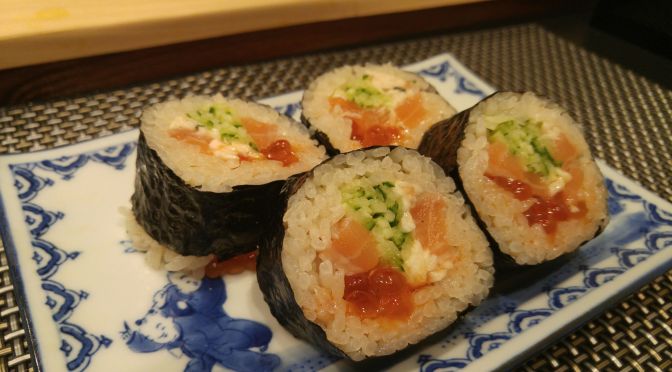
Myoga sushi roll.

Now there are two basic ways of presenting myoga as sushi.
First, as shown on above picture, as a roll.
It doesn’t have to be complicated. Just chop the myoga in strips and fill the roll with it accompanied by some wasabi.

Myoga Sushi nigiri.

The other basic way is present it as sushi nigiri on top of a small ball of sushi rice previously smeared with a little wasabi.

You can prepare the myoga in two basic ways,too:
The first one would would be just to wash it and use it raw.
The second would be to pickle it in rice vinegar and sugar for a while, press it and serve it in both sushi styles as explained above.

There are other interesting possibilities when you let your imagination go free as in above picture where the rice is replaced with a small cube of tofu and the topping is made with chopped myoga, tofu and wasabi all mixed together!

To further convince you, look at the picture above:
All vegan sushi:
from top down: Cucumber, egg plant/aubergine and myoga. The last are pickled daikon!

RECOMMENDED RELATED SITES:
Warren Bobrow
Wild River Review
Bread + Butter
5 Star Foodie
Frank Fariello
Elinluv Tidbit Corner
Tokyo Terrace
Maison de Christina
Chrys Niles
Comestilblog
Greedy Girl
Bouchon For 2
Russell 3

Please check the new postings at:
sake, shochu and sushi

—————————————-
日本語のブログ
—————————————-

New Year Sashimi Sets at Supermarkets in Shizuoka

January 2, 2010 by dragonlife

Tradition has been changed or made with altogether!
From this year, the main supermarkets were oprn on New Year’s Day in Shizuoka.
Economic crisis? Cutthroat competition with “Convenience Stores”?
The result is that you don’t to worry any more about stocking up foood for the long Japanese New Year Holidays!

Not only the Shizutetsu Chain Supermarkets were open, but they had advertized bargains well in advance.
One concerned sashimi.
I just couldn’t ignore it and visited the largest store near my home yesterday afternoon.
I noticed that I had messed with my mobile phone camera today when I noticed the dates printed on the pics. I never do so, but at least, it will serve as a proof that I reaaly the pics yesterday! LOL

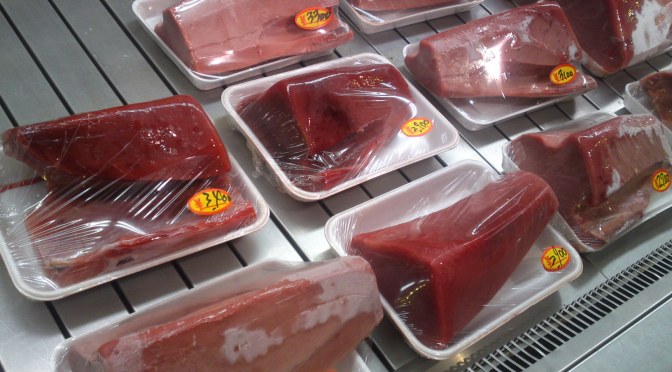
As you can see on the above pic there was plenty to choose from.
The main particularity was that the tuna was all wild tuna (Shizutetsu has a direct delivery deal with the various harbours in the Prefecture!)

The set above is priced at about 25US$ and included sashimi from 3 different tuna: honmaguro, tonbomaguro and bachimaguro, from akami to chu-toro.

The above set for about 50US$ is a bit extravagant, athough very cheap (dead cheap abroad, I suppose!) and included three types of maguro/tuna, one tai/seabream, one madai/true seabream, one tako/octopus, one hirame/sole, one ika/cuttlefish, one buri/yellowtail, amaebi/sweet shrimps, hotate/scallops and one shake/salmon!

This is the one I chose for both of us (25US$)!

Top from left to right:
Honbomagurao Chutoro, Surumeika/Cuttlefish, Amaebi/Sweet Shrimps and Bachimaguro Chutoro
Bottom from left to right:
Hirame/Sole, Bachimaguro Chutoro, Buri/Yellowtail, and Hotate/ Scallops.

Of course I had Sake from Shizuoka with that lot!

RECOMMENDED RELATED SITES:
Warren Bobrow
Wild River Review
Bread + Butter
5 Star Foodie
Frank Fariello
Elinluv Tidbit Corner
Tokyo Terrace
Maison de Christina
Chrys Niles
Comestilblog
Greedy Girl
Bouchon For 2

Please check the new postings at:
sake, shochu and sushi

—————————————-
日本語のブログ
—————————————-

Oshizushi/Pressed Sushi Techniques 4: Seared Sebream/Tai no Aburi

January 1, 2010 by dragonlife

SYNOPSIS:

Sushi exists under many forms and guises.
It is not all nigiri and (more ubiquitous) sushi rolls!
Have you ever heard of Oshizushi?

Oshizushi (押し寿司, litterally pressed sushi), is a pressed sushi from the Kansai Region, a favourite and specialty of Osaka.

Oshibako unmounted

It is made with the help of a block-shaped piece formed using a wooden mold, called an oshibako/押し箱.

Oshibako lined with toppings

The chef lines the bottom of the oshibako with the toppings, covers them with sushi rice, and then presses the lid of the mold down to create a compact, rectilinear block.

Cutting Grilled Eel Oshizushi

The block is then removed from the mold and then cut into bite-sized pieces.

It is great fun to experiment at home for large parties or the family as you can include almost anything.
Moreover, oshizuhi is easy to transport and include in bento!

The recipes and techniques I’m introducing here are professional, but with a little practice I’m sure you will become a specialist

1)Salmon Marinated in Seaweed/Sake Sushi Konbushime, 2) Seared Prime Beef/Gyuniku Aburi, 3) Egg Bearing Snow Crab/Seikogani

———————————-

Seabreams or Snappers come in so many varieties all over thw orld that it becomes quite easy to find and adapt to various cuisines.
The Japanese are extremely fond of it either raw or steamed with rice.
When using it as sashimi or sushi, choose a fresh fis. Look at their eyes and press with fingers. And use your nose!

Madai/真鯛 or “True Seabream”, the most commonly used type of seabream in Japan.

For an extra finishing touch for the taste, use fresh leaves of sansho/山椒 or Japanese pepper (also called ki no me/木の芽).
The English name is Shichuan Pepper, although we are talking of the fresh plant here.

In Japan the dried and powdered leaves of Zanthoxylum sancho are used to make noodle dishes and soups mildly hot and fragrant. The whole fresh leaves, 木の芽 kinome, are used to flavour vegetables, especially bamboo shoots, and to decorate soups. Typically the young shoots are used in this way giving an aromatic lemony flavour to food. They are used to denote spring seasonality in food. The buds, seeds, flowers, and hulls are also used.

Chop some leaves finely enough to use with sushi, but not to fine. Cut them as short as shown in picture.

Soften light seaweed in lukewarm water and spread it over a clean cloth.

Line the bottom of the oshibako/box with slices of seabream fillet as tightly to each other as possible.
Sprinkle with chopped sansho leaves.
Fill with sushi rice and press.

Unloose oshizushi out of the box.
Brush the surface lightly with some soy sauce (I sweeten it a bit by mixing it with a little mirin/sweet sake).
Sear the fish lightly.
Repeat the same process twice more so as to cook only the surface and make it take a nice colour.
This way you will be able to taste the fish in two different ways inside your mouth!

Spread the light seaweed over the top.
Cut to size and serve immediately for maximum enjoyment!

RECOMMENDED RELATED SITES:
Warren Bobrow
Wild River Review
Bread + Butter
5 Star Foodie
Frank Fariello
Elinluv Tidbit Corner
Tokyo Terrace
Maison de Christina
Chrys Niles
Comestilblog
Greedy Girl
Bouchon For 2

Please check the new postings at:
sake, shochu and sushi

—————————————-
日本語のブログ
—————————————-

Oshizushi/Pressed Sushi Techniques 3: Egg Bearing Snow Crab/Seikogani

December 31, 2009 by dragonlife

SYNOPSIS:

Sushi exists under many forms and guises.
It is not all nigiri and (more ubiquitous) sushi rolls!
Have you ever heard of Oshizushi?

Oshizushi (押し寿司, litterally pressed sushi), is a pressed sushi from the Kansai Region, a favourite and specialty of Osaka.

Oshibako unmounted

It is made with the help of a block-shaped piece formed using a wooden mold, called an oshibako/押し箱.

Oshibako lined with toppings

The chef lines the bottom of the oshibako with the toppings, covers them with sushi rice, and then presses the lid of the mold down to create a compact, rectilinear block.

Cutting Grilled Eel Oshizushi

The block is then removed from the mold and then cut into bite-sized pieces.

It is great fun to experiment at home for large parties or the family as you can include almost anything.
Moreover, oshizuhi is easy to transport and include in bento!

The recipes and techniques I’m introducing here are professional, but with a little practice I’m sure you will become a specialist

———————————-

Egg Bearing Snow Crab/Seikogani

Snow Crab/Zuwagani

Seikogani is the Japanese name for the female Snow Crab or Zuwagani, when she is bearing her eggs.
Contrary to many other kinds of crabs, the female snow crabs, even when bearing eggs, lose little of their food and taste quality with the added advantage of an extra delicacy and taste. On the other hand the main food is found inside the shell instead of the legs and pincers for the males.
Therefore, if you get your hands on such a specimen, do not ignore it, even if they are noticeably smaller than their male counterparts!

Boiled snow crabs.

The best is actually to combine both male and female into a combination sushi.

Above are the shells of two snow crabs, the large male one containing white flesh and red brains from both male and female, the smaller female one containing the eggs, and the flesh taken out of the male legs after boiling and cooling.

See above picture for better view of the edible morsels: white flesh, red brains (don’t forget these!) and eggs.

As there is a danger of a general crumbling out of the ingredients, line the bottom of the oshibako/box with a good layer of light seaweed first instead of doing it after you have unloose the sushi out ofits box.
Then place legs flesh tightly parallel to each other to form as compact as possible layer. Cover the leg flesh with the eggs and red brains into a pleasing design.
Finally fill with sushi rice and press.

Unloose sushi from its box and cut to size before serving!

RECOMMENDED RELATED SITES:
Warren Bobrow
Wild River Review
Bread + Butter
5 Star Foodie
Frank Fariello
Elinluv Tidbit Corner
Tokyo Terrace
Maison de Christina
Chrys Niles
Comestilblog
Greedy Girl
Bouchon For 2

Please check the new postings at:
sake, shochu and sushi

—————————————-
日本語のブログ
—————————————-

Oshizushi/Pressed Sushi Techniques 2: Seared Prime Beef/Gyuniku Aburi

December 30, 2009 by dragonlife

SYNOPSIS:

Sushi exists under many forms and guises.
It is not all nigiri and (more ubiquitous) sushi rolls!
Have you ever heard of Oshizushi?

Oshizushi (押し寿司, litterally pressed sushi), is a pressed sushi from the Kansai Region, a favourite and specialty of Osaka.

Oshibako unmounted

It is made with the help of a block-shaped piece formed using a wooden mold, called an oshibako/押し箱.

Oshibako lined with toppings

The chef lines the bottom of the oshibako with the toppings, covers them with sushi rice, and then presses the lid of the mold down to create a compact, rectilinear block.

Cutting Grilled Eel Oshizushi

The block is then removed from the mold and then cut into bite-sized pieces.

It is great fun to experiment at home for large parties or the family as you can include almost anything.
Moreover, oshizuhi is easy to transport and include in bento!

The recipes and techniques I’m introducing here are professional, but with a little practice I’m sure you will become a specialist

———————————-

Seared Prime Beef/Gyuniku Aburi

Japanese prime beef has become a registered trademark all over the world be it from Kobe or other regions.
The present sushi was made with “Kuroge Gyuniku/黒毛牛肉/Black Hair Beef from animals raised to the age of 12 months in Fukui Prefecture.
Do check the origin of your beef!

When preparing this slightly extravagant sushi, choose a large slice of prime beef with plenty of “fat veins” as shown on the above picture.
Don’t choose too thick or too thin, either. Think of the proportion of the beef and rice. Bear in mind that the the seared beef will also loose some of its thickness.

Sprinkle the beef with quality ground balck pepper and salt.
Sear it or grill it lightly on both sides quickly.
This process will enhance the sweetness of the meat.

-Slice the meat into bite-sized portions as shown in above picture at a slant after having cut off the fatty extremity.

Lay the bottom of the oshibako/box with slices of beef as shown in above picture in a “staggering” fashion. If you don’t, the slices will slideaway from each other.
Cover with shiso/perilla leaves.
Cover with sushi rice and press.

Soften light seaweed in lukewarm water and spread it over a clean cloth.
Unloose the sushi out of its box.
The beef should be on top.
Spread the light seaweed over the top.
Cut to size and serve immediately for maximum enjoyment!

RECOMMENDED RELATED SITES:
Warren Bobrow
Wild River Review
Bread + Butter
5 Star Foodie
Frank Fariello
Elinluv Tidbit Corner
Tokyo Terrace
Maison de Christina
Chrys Niles
Comestilblog
Greedy Girl
Bouchon For 2

Please check the new postings at:
sake, shochu and sushi

—————————————-
日本語のブログ
—————————————-

Oshizushi/Pressed Sushi Techniques 1: Salmon Marinated in Seaweed/Sake Sushi Konbushime

December 28, 2009 by dragonlife

Sushi exists under many forms and guises.
It not all nigiri and (more ubiquitous) sushi rolls!
Have you ever heard of Oshizushi?

Oshizushi (押し寿司, litterally pressed sushi), is a pressed sushi from the Kansai Region, a favourite and specialty of Osaka.

Oshibako unmounted

It is made with the help of a block-shaped piece formed using a wooden mold, called an oshibako/押し箱.

Oshibako lined with toppings

The chef lines the bottom of the oshibako with the toppings, covers them with sushi rice, and then presses the lid of the mold down to create a compact, rectilinear block.

Cutting Grilled Eel Oshizushi

The block is then removed from the mold and then cut into bite-sized pieces.

It is great fun to experiment at home for large parties or the family as you can include almost anything.
Moreover, oshizuhi is easy to transport and include in bento!

The recipes and techniques I’m introducing here are professional, but with a little practice I’m sure you will become a specialist

——————————

Oshizushi/Pressed Sushi Techniques 1: Salmon Marinated in Seaweed/Sake Sushi Konbushime

For sushi rice preparation, check HERE for previous posting!

Konbushime/昆布〆means that the fish is “marinated with seaweed.

Konbu/Seaweed is now readily available on Japanese and Asian markets all over the world or on the internet.

Two types of konbu/seaweed are used:
-Dark/black thick Konbu/Seaweed is bought dry and has to be softened in lukewarm water for a while. That particular step is very easy to learn.
Keep in mind it is edible, although after marination, it should be discarded.

-Thin, light coloured (almost transparent) is used as an ingredient both for taste and the finishing touch. If not available, you may replace it with fine green leaves.
It is called “Kagome Konbu/かごめ昆布”.

An even better light seaweed is called “Take Kawa Konbu/竹皮昆布/Bamboo Skin Saweed” and is widely used by professionals.

Both light coloured seaweeds have to be softened in lukewarm water, sponged off and spread into thin sheets first. But it is really worth the work!

After having softened the dark konbu, spread it over a clean working table and place the fresh (fresh, please!) salmon slices over one sheet and covering the lot with another sheet.
Wrap it in cellophane paper and leave it in the fridge for at least 30 minutes.

During that time soften light seaweed in lukewarm water and spread it over a clean cloth.

Line the bottom of the oshibako/box with one layer of salmon (no dark seaweed!). Spread light seaweed over the salmon and spread a first layer sushi rice.

Repeat the same operation once more and press.

Unloose the sushi out of its box.
The fish should be on top.
Grill the top of the fish lightly with a hand burner just enough to change the colour.
That step will enable to savour two different tastes at the same time!

Place very thin slices of lemon (clean organic, please!) on top of the rice.
It will abate the “fishy smell/taste”.

Lay another layer of fine light seaweed over the top.
Cut and serve!

RECOMMENDED RELATED SITES:
Warren Bobrow
Wild River Review
Bread + Butter
5 Star Foodie
Frank Fariello
Elinluv Tidbit Corner
Tokyo Terrace
Maison de Christina
Chrys Niles
Comestilblog
Greedy Girl
Bouchon For 2

Please check the new postings at:
sake, shochu and sushi

—————————————-
日本語のブログ
—————————————-

Sashimi Mini-Plate for Christmas at Tomii!

December 26, 2009 by dragonlife

The agnostic I am have little to do with Christmas and the New Year, except wishing for great ones to all and sundry.
Actually I worked both on the 24th and 25th (and will on the 26th).
Last night on my way back from University I was really starving (diet consequence as I’m already 5 kg lighter than in September!) and I had to store something into that body of mine.
A quick trip to Tomii was in order.

I managed to keep my hunger in check and asked for a small plate (I mean, a really small one) of sashimi.
Tomii gladly obliged and served me the following (see above picture)*

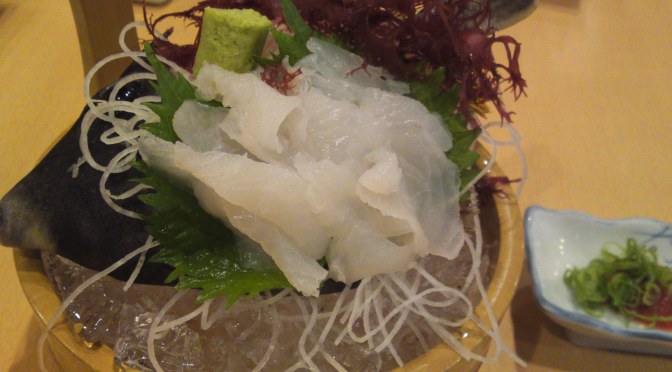
In thebackground, Kan Buri/寒鰤 or Japanese Amberjack/Five-ray Yellowtail ona bed of leaf spouts and a sprig of shiso/紫蘇 perilla flowers.

In front Honmaguro/本鮪 orBlue Fin Tuna O-toro (Belly fat part) and Akami (lean part) and Hirame/平目 or Sole/Flounder.

The colours of the fish are very reminsicent of Santa Claus, don’t you think? LOL

TOMII
Shizuoka City, Aoi Ku, Tokiwa-cho, 1-2-7, Tomii Bldg, 1F
Tel.: 054-274-0666
Business hours: 17:00~22:00
Closed on Sundays
HOMEPAGE (Japanese)

RECOMMENDED RELATED SITES:
Warren Bobrow
Wild River Review
Bread + Butter
5 Star Foodie
Frank Fariello
Elinluv Tidbit Corner
Tokyo Terrace
Maison de Christina
Chrys Niles
Comestilblog
Greedy Girl
Bouchon For 2

Please check the new postings at:
sake, shochu and sushi

—————————————-
日本語のブログ
—————————————-

Shizuoka Sashimi: Kinmedai/Splendid Alfonsino

December 24, 2009 by dragonlife

We had this fish yesterday at Uzu Izakaya in Shizuoka City as our second sashimi plate: Kinmedai/金目鯛.

Kinmedai/金目鯛 in Japanese means “Golden Eyes Seabream”.
It is a fish genus common all over the world, but with varying quality level.

This kinmedai was caught off the Izu Peninsula in the Western part of Shizuoka Prefecture.

Izu Peninsula is considered one of the best areas for that particular fish (it has different names in other regions!).

It was served cut in small rectangular pieces with a deep indent in the middle where you can insert the freshly grated wasabi (from along the Abe River in Shizuoka City) for better chopsticks manipulation and utmost appreciation.
The flesh is so tender it almost melts inside your mouth. The taste is sublime for a fish which is not considered as expensive here. (which shows you can enjoy sashimi and sushi at very reasonable prices! Jibe for people spending fortunes in Tokyo and abroad! LOL).
Generally speking fish is readily available and reasonble for all budgets in our Prefecture.

I feel like a lucky b…..d!

UZU
Shizuoka City, Otowa-cho, 3-18
Tel.: 054-249-6262
Business hours: 17:00=23:00
Closed on Mondays and first Tuesday
Reservations recommended
Credit cards OK
HOMEPAGE (Japanese, but have a look at the pics!)

RECOMMENDED RELATED SITES:
Warren Bobrow
Wild River Review
Bread + Butter
5 Star Foodie
Frank Fariello
Elinluv Tidbit Corner
Tokyo Terrace
Maison de Christina
Chrys Niles
Comestilblog
Greedy Girl
Bouchon For 2

Please check the new postings at:
sake, shochu and sushi

—————————————-
日本語のブログ
—————————————-

Dinner at Sushi Ko (‘09/12/10)

December 14, 2009 by dragonlife

When I go for sushi with the Missus, we invariably visit Sushi Ko in Sushi Ko.
I just can’t enumerate all the good reasons for visiting this sushi restaurant.
It is the best deal in town when it comes to quality, freshness, prices and service. Full stop.

We were served ankimo/アンキモ or monkfish liver (I call it Japanese foir gras!) with the first drink.
That helped us consider which sashimi to start with.
Here is what we ordered on that particular day (the fish served is only seasonal at Sushi Ko, so choosing sashimiis a great venture!):

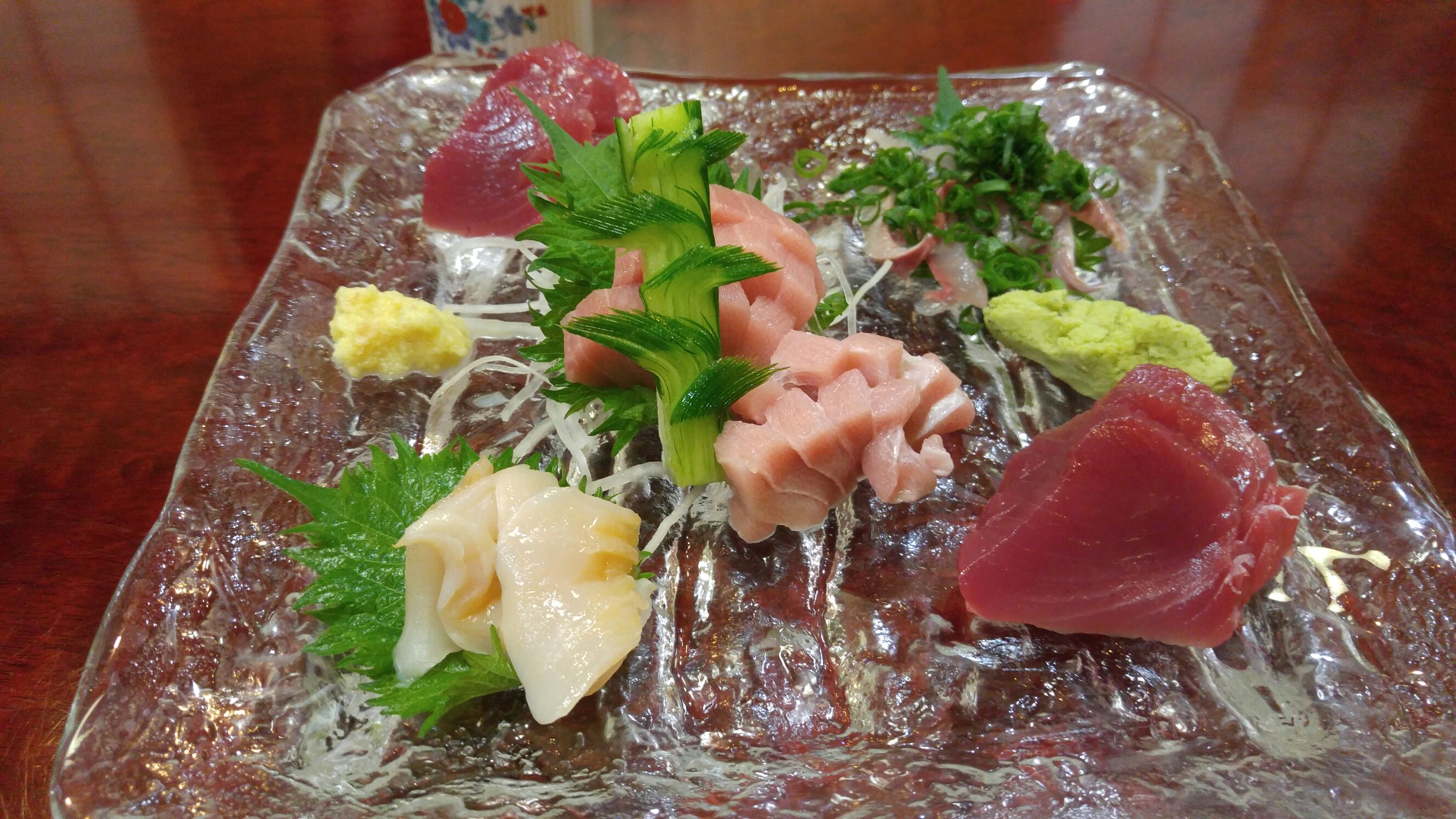
-Bottom left: “honmaguro/本鮪”, blue fin tuna from Oma (Aomori Prefecture), chu-toro/semi-fat part.
-Top left: O-toro/belly fat part of same fish
-Bottom centre: “Aori Ika/あおり烏賊, Great Fin Reef Squid from Suruga Bay in Shizuoka Prefecture.
-Bottom right: Akami/lean part rom same tuna.

Notice the “shiso/紫蘇”, perilla flowers, grated “wasabi/山葵” from Shizuoka and “wakame/若布” seaweed at the back!

“Kinmeidai/金目鯛”, gold eye seabream from Izu penisula in Shizuoka Prefecture resting on a shiso/perilla leaf.

As we were not ready yet for the sushi (rice) we ordered one more sashimi: “aji tataki/鯵たたき”, or saurel/mackerel pike tartare Caught off Shizuoka shores).
Very fresh and enjoyable as you little bits at a time.

Just to prove how fresh the fish was (it was caught live from the tank), we were served its head and bones dep-fried. This is actually the traditional Japanese way to get their calcium for their bodies!

Sushi is not only superlative at sashimi and sushi, but they also provide a great array of excellent cooked dishes.
The Missus being ravenous, she couldn’t help asking for the “hotate gratin/帆立グラタン, scallops gratin! French cuisine at a sushi restaurant! Why not!

On the other I couldn’t help ogling at the “botan ebi/牡丹蝦, large prawns” from Hokkaido. I opted for them as sushi nigiri. These large prawns are very sweet and are exclusively eaten raw.

Once again, to prove their freshness, we were served the heads deep-fried!

“Maguro Zuke/鮪付け”, marinated tuna is another morsel that we must have. The tuna, akami/lean part usually is marinated for 10~20 minutes in a mixture of soy sauce, sake and mirin (and other “secret” ingredients) before being placed on the shari/rice ball. Almost makes for a dessert.

One particular creation by Sushi Ko is their Sushi Millefeuille (another French concept?)
They offer two kinds, one international style, the other Japanese style.
For once, we chose the Japanese style:
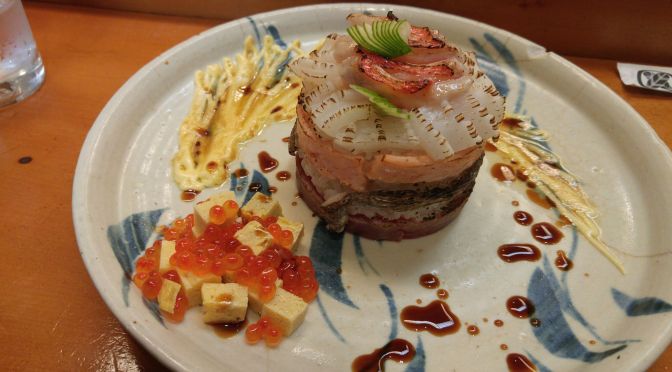
“kanpachi/間八” or greater Amberjack, “Kazu no Ko/数の子”, or herring roe and cucumber on the first tier, “Katsuo Bushi/鰹節” or dry bonito shavings and chopped thin leeks, the whole surrounded with dressing and “Tobikko/飛び子” or flying fish roe!

From then it was ordering morsels, one set of two/”nikan-二冠” at a time:
“hotate/帆立”, raw scallops muscle part.

“HIrame/平目”, or sole, served pre-seasoned with a little salt and lemon juice. Perfect as it is. No need for soy sauce!

“Me-negi/芽葱”, or leek sprouts for the vegans!

The Missus couldn’t stop and ordered Japanese-style deep-fried oysters!

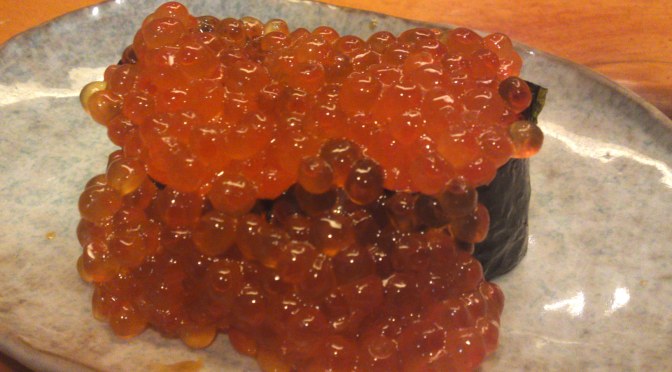
And the ubiquitous “Ikura mini don/いくらミニ丼”, or mini bowl of rice topped with salmon roe and freshly grated wasabi (from Shizuoka, of course!).

As for me, I will not leave the place without the “Tamagoyaki/卵焼き” or Japanese omellette. Home-made (not all sushi restaurants go through the pain of cooking their own tamagoyaki!”) and artfully cut!

And the extravagant dessert: “Anago/穴子”, conger eel first grilled to a soft texture and topped with tare/sauce (always original at Sushi Ko!)!

We did have a lot of drink, I can assure you, but we remembered what we savoured!
Next time? Very soon, I’m sure!

Sushi Ko
shizuoka City, Aoi Ku, Ryogae-cho. 2-3-1 (Aoba Koen)
Tel.: 054-2512898
Business Hours: 17:00~25:00. 17:00~23:00 (Sundays)
Closed on Wednesdays
Reservations recommended
Credit cards OK
HOMEPAGE (Japanese)

RECOMMENDED RELATED SITES:
Warren Bobrow
Wild River Review
Bread + Butter
5 Star Foodie
Frank Fariello
Elinluv Tidbit Corner
Tokyo Terrace
Maison de Christina
Chrys Niles
Comestilblog
Greedy Girl
Bouchon For 2

Please check the new postings at:
sake, shochu and sushi

—————————————-
日本語のブログ
—————————————-

Sashimi Plate at Tomii (‘09/12/04)

December 5, 2009 by dragonlife

I suppose I do not need to introduce Tomii again as it is my favourite Japanese restaurant in the whole of Shizuoka Prefecture!
To make a long story short, I paid them a visit last night on my way back from university before going home.

I was not that hungry, so I just ordered “o-tsukuri/sashimi plate”.

From left to right:
Yellow carrot, Suzuki/black bass, various sprouts, Kyoto ninjin/Kyoto red carrot, Aka Ika/red squid, shiso/perilla flowers and beni shigure daikon/red daikon variety.

For a closer view of the fresh vegetables!

From left to right:
Kan buri/Winter yelowtail on shiso/perilla leaf, Uni/sea urchin under a slice beni daikon/red daikon and bachi maguro/tuna variety.

Clarity: very clear
Colour: faint golden hue
Aroma: Fresh, discreet, feminine, fruity. Memories of vanilla, banana and pineapple.
Body: velvety
Taste: Soft attack. Well-rounded. Shirt tail.
Pleasant, fleeting, feminine, sophisticated.
Fruity and dry, but very smooth.
Pineapple, soft citruses
Junmai tingle appears with food with a late appearance by almonds.
Very soft and fleeting finish with more dry almonds.

Overall: Extravagant, sophisiticated, fleetingly feminine are not exaggerated descriptions for this sake, the last created by Master Brewer hase who passed away in 2009.
Now, how would you drink it?
With your love? as an extravagant aperitif? Or on your own away from the bustle of everyday life….

TOMII
Shizuoka City, Aoi Ku, Tokiwa-cho, 1-2-7, Tomii Bldg, 1F
Tel.: 054-274-0666
Business hours: 17:00~22:00
Closed on Sundays
HOMEPAGE (Japanese)

RECOMMENDED RELATED SITES:
Warren Bobrow
Wild River Review
Bread + Butter
5 Star Foodie
Frank Fariello
Elinluv Tidbit Corner
Tokyo Terrace
Maison de Christina
Chrys Niles
Comestilblog
Greedy Girl
Bouchon For 2

Please check the new postings at:
sake, shochu and sushi

—————————————-
日本語のブログ
—————————————-

Marine Life Sustainability and Stock Preservation in Japan

October 24, 2009 by dragonlife

research-fishingship

Foodbuzz never asked me for such an article. I just wrote it first out of concern for some of my Foodbuzz Friends!

It was Lou-Ann’s surprise in particular which originally prompted me into investigation to back up knowledge acquired though many years spent in this great country, Japan. It is the second time I publish this article as it has become more of actuality and new information has been made available.

I use the word “great” when applied to Japan for a simple reason:
Japan is the one country which most extensively conducts and sponsors research and development of fish stocks.
This country has also come up with some momentous discoveries related to the fishing environment:
-Japanese fishermen south of Kyushu Island discovered that planting trees on small islands increased manifold the amount of vegetal plankton carried into the surrounding sea resulting in an immediate increase of the fish population.
-Japanese researchers found out that building small pyramids on the sea floor with concrete or plastic (a beneficial dumping at last?) blocks attracted corals, sea anemones, seaweed and shellfish, thus creating a food chain for fish. Such pyramids will surely prove more beneficial to mankind than all the Egyptian pyramids put together!
They have also realised that dragging out sunk ships was not needed as the same lost vessels were populated by all kinds of marine life!
In the north of Japan crab stocks are been replenished by simply sinking giant scaffolds to the bootom of the sea, thus providing the delicious critters with the subtarreanean geography they love best!
Sakura ebi/Cherry shrimps fishermen in Yui (Shizuoka Prefecture again!) syphon the shrimp out of the nets before opening and releasing all other marine lie safely back into the sea!

The Japanese have been (unjustly) accused of emptying the seas. Actually Spain holds the world record for fish catch and consumption.
I already have written an article on whale meat. I find it galling that Japan is villified for eating whale meat by the very countries which depopulated the globe of sea-mammals in the 19th Century: US, Canada, Russia, Australia and New Zealand (alright, Great Britain for the last two maybe!) in the Pacific Ocean. US, Canada, Norway, Great Britain, France, Spain and Russia in the Atlantic Ocean. And most of them again in the Arctic and Antarctic Oceans. What do you think Commodore Perry was before he was delegated to order Japan to “open its doors”?
This country is repeatedly thrown into the same basket of evils. I was recently “told off” because the Japanese kill sharks for their fins before throwing the dead fish back into the sea. Sorry, mate, but you will have to ask the Chinese! The Japanese eat the whole fish when they catch it and make kamaboko from it!

It could go on and on, but this was never the real purpose of this article.

Now, to illustrate and justify the heading of this posting, here is a list of the fish and seafood raised in Japan as opposed to being caught in the wild:

research-honmaguro
Blue Fin Tuna/Honmaguro

Yes, you read it, Blue Fin Tuna! After 23 years of experimentation, a Kyushu fishmonger has finally succeeded in producing the fish from natural mating inside giant offshore sea parks. The fish is already sold over the counter at supermarkets.
No later than last year the Tokai Marine University in Shimizu, Shizuoka City (I live in a great place, don’t I?) also succedein a more sientific manner the raising of the same tuna from the egg, promising that domestic Blur Fin Tuna will roam the same waters in Suruga bay as their wild cousins!
With a ban on tuna fishing in the Mediterranean Sea being pushed through legislation by the EU, Japan will find itself one day in the rich position of actually exporting tuna!

research-mebachi
Big-eyed Tuna/Mebachi Maguro

Human-raising Research is conducted and nearly brought to fruition.

research-kihada
Albacore Tuna: Kihada Maguro

Human-raising Research is conducted and will soon be sucessful.

Note:
Indian Ocean Tuna/Indo Maguro: Human-raising Research is conducted abroad and such fish are imported to Japan.

research-buri
Yellowtail/Buri

Over 62,000 tons of human-raised fish consumed last year.

research-kanpachi
Amberjack/Kanpachi

Over 49,000 tons of human-raised fish consumed last year.

research-shimaaji
Striped Jack/Shima Aji

Over 3,000 tons of human-raised fish consumed last year.

research-maaaji
Horse Mackerel/Ma Aji

Over 3,500 tons of human-raised fish consumed last year.

research-masaba
True Mackerel-Japanese Mackerel/Ma Saba

Human raising succeeded and fish are already sold over the counter.

research-maiwashi
True Sardine-Pilchard/Ma Iwashi

Human-raising Research is being conducted and could created a real revolution as the same fish also become feed for above tuna.

research-isaki
Isaki/Grouper variety-Parapristipona Trilinoatum

9 tons of human-raised fish consumed in Nagasaki Prefecture alone last year. Shizuoka is also coming up with them!

research-silversalmon
Silver Salmon/Gin Sake

Over 8,000 tons of human-raised fish consumed last year.
Production very fast.

research-madai
Porgy/Madai

Over 71,000 tons of human-raised fish consumed last year as opposed to 15,000 tons caught at sea.
Al kinds of seabreams are actually on the line.

research-suzuki
Seabass/Suzuki

382 tons tons of human-raised fish consumed in Kagawa Prefecture (Shikoku) alone last year.

research-kisu
Sand Borer-Sillago/Kisu

Human-raising Research is being conducted.

research-kochi
Bar-tailed Flathead/Kochi

Human-raising is being conducted.

research-ainame
Ainame/Alexagrammos otakii

Human-raising has succeeded and some fish is already sold over the counter.

research-kue
Kelp Bass/Kue

A success story in Shizuoka and Nagasaki Prefectures where human-raised fish are already sold over the counter.

research-torafugu
Globefish-Tiger Globefish/Tora Fugu

Over 5,000 tons of human-raised fish consumed last year.
Shizuoka is rapidly becoming a major producer, especially inhamana (sea) Lake in the Western part of the Prefecture.

research-kurumaebi
Large Prawn/Kuruma Ebi

Over 1,700 tons of human-raised prawns consumed last year.

research-iseebi
Spiny Lobster/Ise Ebi

Human-raising Research is being conducted.

research-akagai
Ark Shell-Bloody Clam/Akagai

Human-raising Research is being conducted.

research-mirugai
Gaper/Mirugai

Human-raising Research is being conducted

research-torigai
Large Cockle/Torigai

Human-raising Research is being conducted

research-hamaguri
Hard Clam/Hamaguri

Very large amounts of half human-raised shellfish consumed last year.
All the clams picke by tourist in Hamana lake have actually been planted young there!

research-hokkigai
Surf Clam/Hokkigai

Human-raising Research bein conducted

research-awabi
Abalone/ Awabi

32 tons tons of human-raised abalones consumed in Hokkaido and Nagasaki Prefectures alone last year.
Now, knowing the price of such shellfish and the enormous consumption in other countries, it promises to become a very lucrative business!

research-hotate1
Scallops/Hotate

Over 270,000 tons of human-raised scallops consumed last year.
The shellffish being hermaphrodite, it will become easier and easier tomake and sell. Here in Shizuoka it has simply become ridiculaoulsy cheap!

research-kaki
Oysters/Kaki

Over 220,000 tons of human-raised oysters + over 35,000 tons of the same out of the shell consumed last year as opposed to 1,600 tons of wild oysters.
Actually soon or later the catch of wild oysters will become strictly regulated as many other shellfish. Poaching both by Japanese and “foreigners” is being fought off in earnest.

research-uni
Sea Urchin/Uni

7 tons tons of human-raised sea urchin consumed in Hokkaido Prefecture alone last year.

research-maanago
Conger Eel/ Ma Anago

Human-raising Research is being conducted

research-unagi
Common Eel/Unagi

Over 21,000 tons of human-raised fish consumed last year as opposed to 610 tons caught in the wild.

In some places, notably Mishima City, eel restaurants refuse to serve wild eels.

research-hamo
Oike Conger eel/Hamo

Human-raising Research is being conducted.

The Japanese have also starting research on different varieties of octopus/tako and squids/ika.

Probably more coming soon or later!

RECOMMENDED RELATED SITES:
Warren Bobrow
Wild River Review
Bread + Butter
5 Star Foodie
Frank Fariello
Elinluv Tidbit Corner
Tokyo Terrace
Maison de Christina
Chrys Niles
Comestilblog
Greedy Girl
Bouchon For 2

Please check the new postings at:
sake, shochu and sushi

—————————————-
日本語のブログ
—————————————-

Ankimo Presentations 2

October 19, 2009 by dragonlife


The Japan Blog List

Please check Shizuoka Gourmet Blog for all the gastronomy in Shizuoka Prefecture!

—————————————————-

ANKIMO-STEAMED
Plain steamed ankimo served with simple cold ponzu sauce

I have already introduced the recipe for preparing Ankimo/Frogfish Liver (Japanese Foie Gras) in a precedent article as well an article on various presentations.
This posting will show you other possibilities!

ANKIMO-SUSH-1

The oshizushi/pressed sushi above is a beauty with fish jelly on top!

—————–

Ankimo Gunkan Mini Seriies!

ANKIMO-SUSHI-2

ANKIMO-SUSHI-3

ANKIMO-SUSHI-4

ANKIMO-SUSHI-5

————————–

ANKIMO-FRIED

Ankimo does not have to be on sushi.
It can be cooked for its own sake such as in Japanese style above or:

ANKIMO-PASTA

Ankimo Pasta. Japanese foie gras instead of duck/goose foie gras!

Seasonal Fishes 15: Sake/Salmon

October 18, 2009 by dragonlife


The Japan Blog List

Please check Shizuoka Gourmet Blog for all the gastronomy in Shizuoka Prefecture!

—————————————————-

SAKE-1

Salmon is a favourite almost everywhere on the Globe, but it is in Japan that you can enjoy in the most numerous manners!

Like every other fish it has many names according to season and place:
Shirozake/White Salmon, Akiaji or Akizake for Autumn Salmon, Shake in Tokyo.
In Spring it is called Tokishirazu.
I don’t have to tell you there are many, many names for it all over the world!

SAKE-SUJIKO

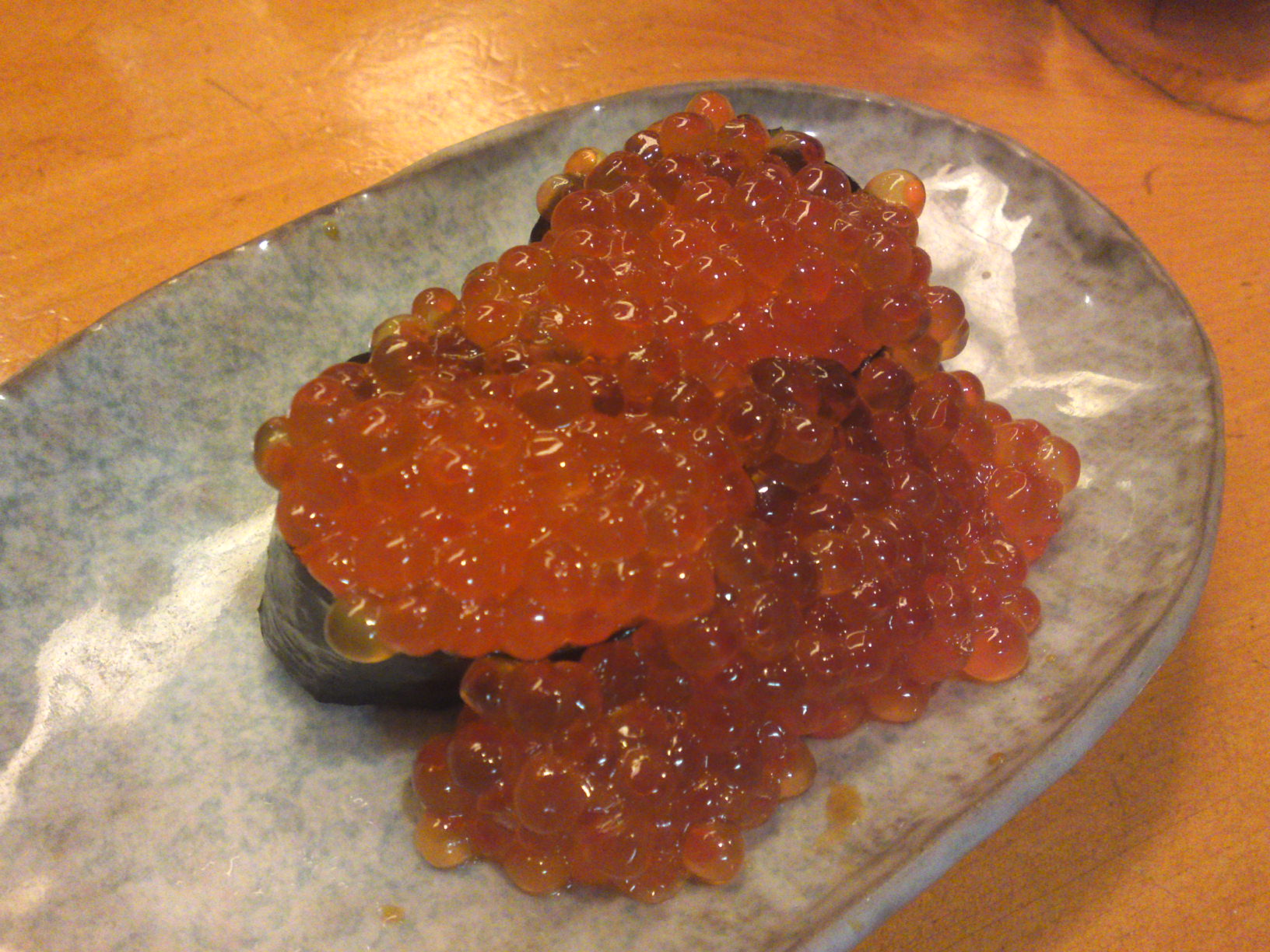
Its roe, before processing, is called Sujiko in Japanese, whereas the salmon roe, once treated, is called Ikura.

SAKE-ROE-SUSHI

Many Japanese appreciate the roe untreated, but more people enjoy it on top of rice as it is with some soy sauce and grated wasabi.

SAKE-SUSHI

It also makes for some splendid colourful creation on a plate of sushi!

SAKE-SUSHI-2

As oshizushi/pressed sushi, it can make some very interesting combinations with the salmon flesh and roe.

SAKE-GOHAN

Have you ever tasted Sake Gohan/Salmon Rice?

SAKE-OSHIZUSHI

Slightly smoked the Japanese way, It is extensively used in the making of bentoes!

Sushi Restaurant: Sushi Ko (‘09/09/25)

September 26, 2009 by dragonlife


The Japan Blog List

Please check Shizuoka Gourmet Blog for all the gastronomy in Shizuoka Prefecture!

—————————————————-

SUSHIKO-09-25-5

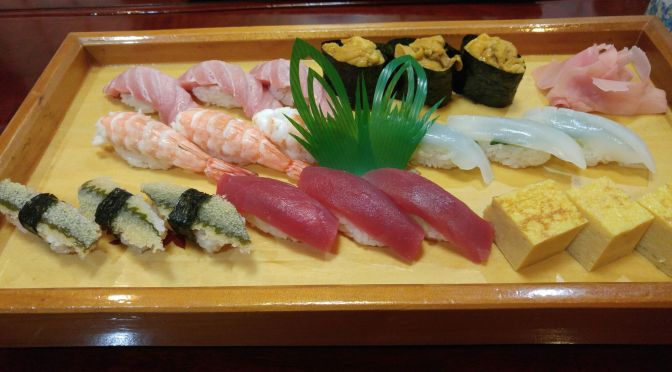
Last night, I took two of my students to Sushi Ko in Shizuoka City to introduce them to the highest quality for the best value sushi in town.
Most sushi restaurants in Japan do not advertize their prices, whereas Sushi Ko does so expcept for the sashimi of thday, which are nonetheless of very good value.

Moreover they serve local seafood whenever possible, and seasonl one only. You do not visit Sushi Ko to fill yourself with cheap fat rolls, but to appreciate healthy top class sushi and sashimi.

SUSHIKO-09-25-9

My students, being both ladies. we ordered a Chablis bottle to start.
Halfway, I ordered for myself a glass of succulent Shizuoka Sake, “Shosetesu/正雪 brewed by Kansawagawa Brewery (located in Yui, one of the best spots for fihing in the Prefecture!).
SUSHIKO-09-25-8
Sashimi: Katsuo/bonito, Shimaaji/Stripde Jack and Kinmedai/plendid alfonsino

Since the last time I visited the place in June with the Missus, the seasonal fish haven’t changed that much yet and we almost ordered the same.
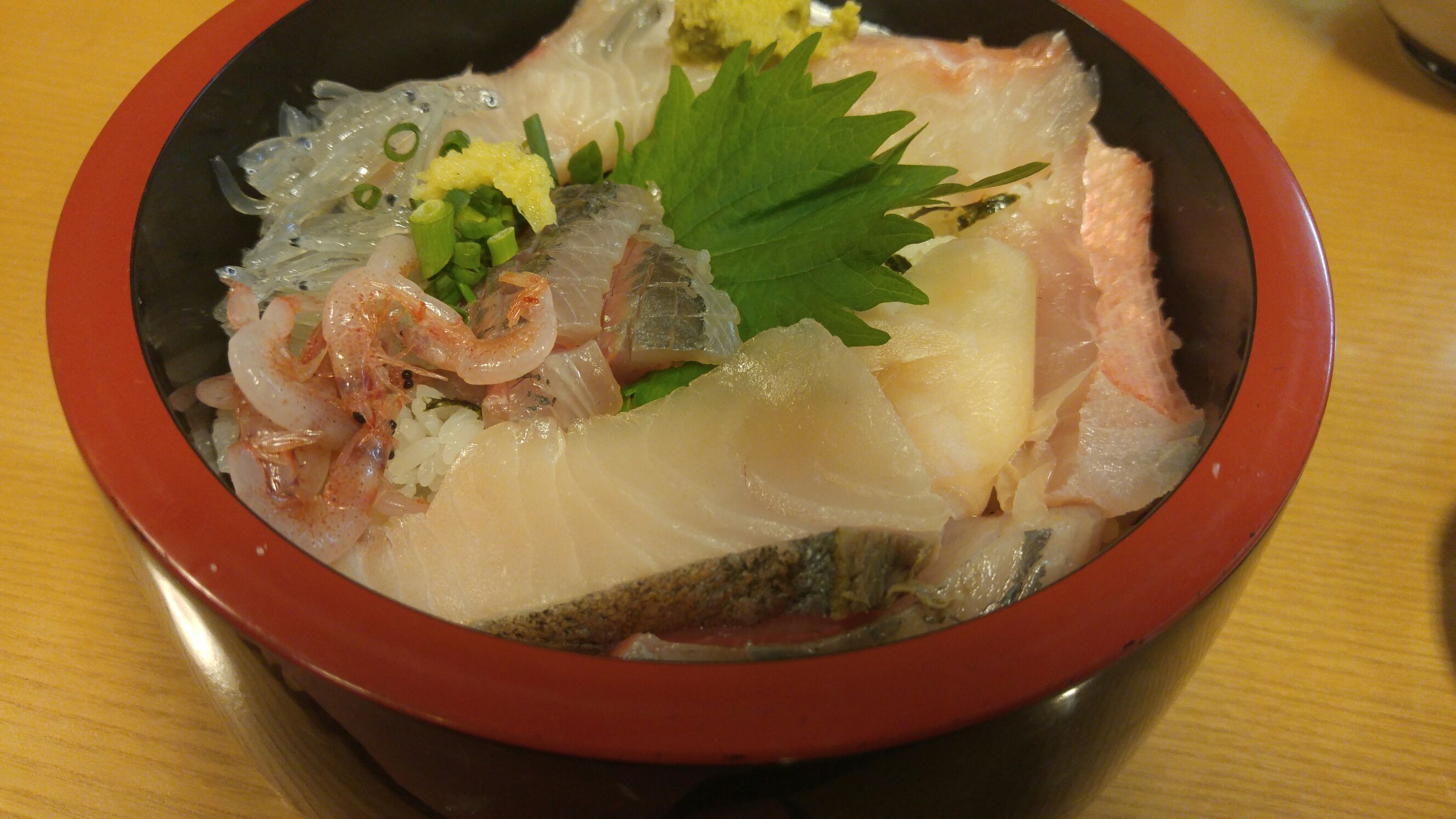
We started with a plate of sashimi consisting of katsuo/bonito, shimaaji/striped jack (a variety of saurel) and kinmedai/plendid alfonsino (a variety of grouper) all caught off Shizuoka’s shores!
SUSHIKO-09-25-4

Next we ordered a “tennen-aji” a saurel caught in the wild as a tataki/Japanese-style tartare served with the rest of the fish.

SUSHIKO-09-25-3

The fish being extremely fresh, its bones and head were later served deep-fried/karaage!

SUSHIKO-09-25-5

Then, it was for the Sushi Ko classics:
Sushi Millefeuille with maguro/tuna, kyuuri/cucumber, avocado adn topped with tobikko/flying fish roe!

SUSHIKO-09-25-2

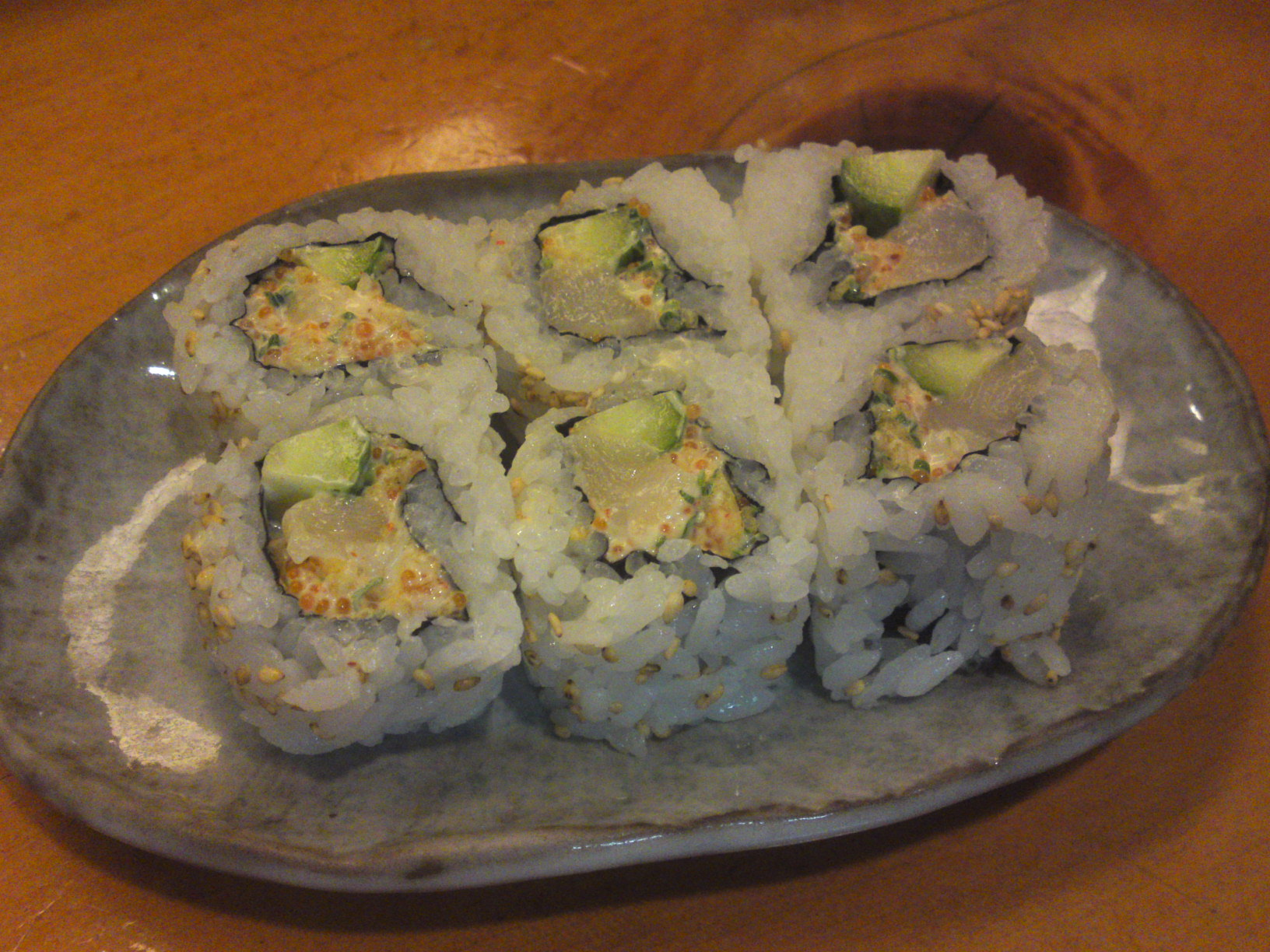
Piri kara hotate maki/spicy scallops roll. A superlative roll made with with finely cut scallops, tobikko, chili pepper, finely chopped leeks and peanuts with mayonnaise and what else.
A must at Sushi Ko!

SUSHIKO-09-25-1

A plate of vegan sushi!

SUSHIKO-09-25-6

The last order is unfortunately going to creat consternation among some of my friends in the US: kujira/whalemeat seasoned with a little salt and a good amount of goma a bura/sesame oil without any siy sauce. Succulent!

Sushi Ko
shizuoka City, Aoi Ku, Ryogae-cho. 2-3-1 (Aoba Koen)
Tel.: 054-2512898
Business Hours: 17:00~25:00. 17:00~23:00 (Sundays)
Closed on Wednesdays
Reservations recommended
Credit cards OK
HOMEPAGE (Japanese)

Seasonal Fishes 14: Buri/Yellowtail

September 20, 2009 by dragonlife


The Japan Blog List

Please check Shizuoka Gourmet Blog for all the gastronomy in Shizuoka Prefecture!

—————————————————-

BURI-1

As explained in a precedent posting on Kampachi we are just between two distinct seasons for Buri/鰤 or Yellowtail, as Hiramasa or young Yellowtail is caught in Summer and Buri/Mature Yellowtail is caught in Winter.

How do you recognize them apart?

BURI-AGO
Buri has a “square chin” as they say in Japanese. Look at the back extremity of the mouth,

BURI-HIRAMASA-AGO
whereas it is more rounded for the hiramasa.

In Japan they are caught south of Hokkaido Island.
They come under many names: Wakashi, Inada, Warasa, Wakana, Hamachi and Mejiro.

Buri/Yellowyail is most popular when caught in rising waters in Winter when called Kan Buri/寒鰤 or “Cold Yellowtail.

BURI-SASHIMI
Buri sashimi after light grill/Aburi/炙り

Young Yellowtails are best eaten as sahimi or

BURI-SUSHI-2
Buri Sushi

or as sushi as they are leaner then.

Older buri, cotaining a lot of fat, are better eaten cooked

BURI-TERIYAKI
Buri Teriyaki,

BURI-ARA
Buri Ara with the whole head, or

BURI-MOPPONZU
Buri Mopponzu, including innards, especially liver and heart.

In the West of Japan, a New Year Meal cannot be conceived without buri!

Natural Buri catch accounts for 70,000~80,000 tonnes, while human-raised buri accounts for over 130,000 tonnes every year.
Imported buri account for less than 3,000 tonnes.